


Valerie You
Updated: May 7
Valerie You
7-11 (CHURCH)
20 September, 2025


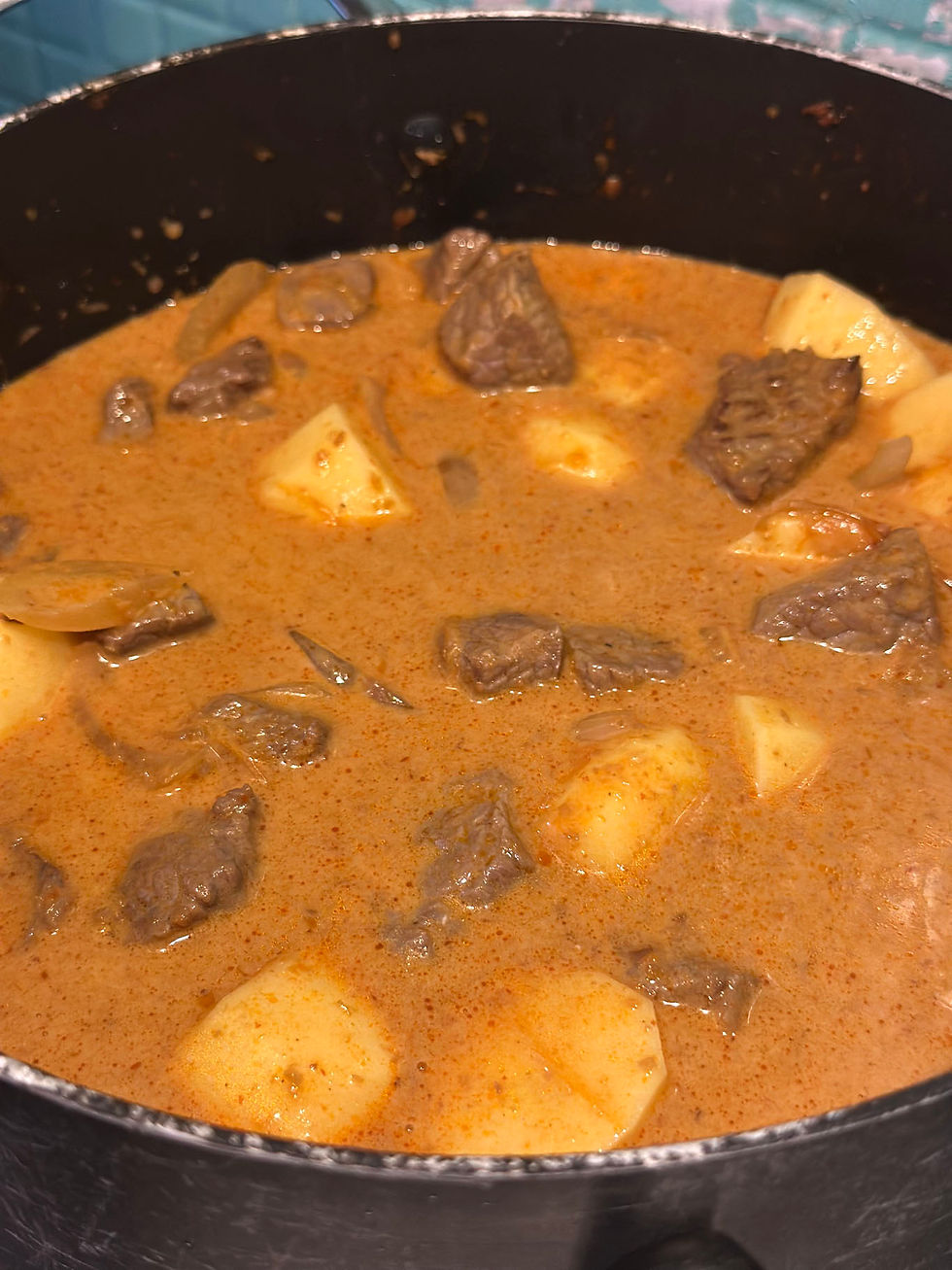


Menu:
Beef rendang
Coconut rice
Malaysian sweet treats
7-11 (Church) - Configuration 1 & 2 are two altar-like arrangements from objects of contemporary life and wellness culture. Configuration 1 features a repurposed abalone can as a censer, surrounded by six Saxenda® (or Ozempic) pens on a Styrofoam platform, with two Yakult bottles holding joss sticks. Configuration 2 similarly employs a food can and injection pens as a communal dinner centrepiece.
This work draws on Chinese animistic traditions of food and prosperity, recontextualizing symbols of abundance with tools of modern health management. By repurposing everyday commercial items into devotional structures, the piece explores the "romanticism of futility" in seeking spiritual meaning within market-driven systems. It functions as both a quiet, spiritual hacktivism and an elegy for its own impossibility, inviting communal reflection on our values, consumption, and the nature of contemporary ritual.
This work is a throwback from to market-savvy critiques of the early post-internet artists, who deftly manipulated the aesthetics of online commerce and the commodification of self-improvement. With the luxury of retrospect, their work often felt like a performative unravelling of the art world's own mechanisms in tangent with the hyper-stylized pursuit of "wellness" or "optimization." Here and now, in the end times, this unravelling is now frozen in time, like the Samsara wheel of life, each spoke—birth, life, death—a separate aesthetic gesture, yet all are stalled in the very moment of their turning.
This work is not a critique or urban subversion, and more about a re-sacralization of the everyday, seen through a capital-pessimistic lens. Where others may harp on the absurdity of wellness culture, this work introduces a ritualistic component—a quiet, almost domestic, devotion. The Saxenda® pens (an alternative to Ozempic) are objects of modern medical intervention and a symbol of contemporary body modification or health management. These are not displayed as found objects, but arranged, reverently, around a censer made from food cans—a direct link to nourishment, sustenance, and prosperity. (The concept of food having an animate or spiritual essence is rooted in historical practices where specific foods were o[ered to secure blessings like good harvests, health, and prosperity.Abalone, in particular, has long been a potent symbol of abundance and fortune, with its Chinese name, bao yu (鮑魚), directly translating to "assured abundance" or "surplus."
Historically, it was a luxury reserved for special occasions and feasts, embodying the highest form of material prosperity and well-being.) The joss sticks, traditionally used in East Asian spiritual practices for o[ering and prayer, remain unlit during the communal act of dinner, reserving their "activation" for a post-meal contemplation. This temporal deferral is key. The altar exists during the meal, an unspoken presence, a potential energy. It acts as a social lubricant and an understated performative prompt, inviting a subtle shift in perception without explicit instruction. The diners become part of the work itself, capturing the social field, the unwitting participants, and the unspoken acknowledgment of this peculiar arrangement.
While 7-11 (Church) - Configuration 1 & 2 is meant to be a gesture of quiet spiritual hacktivism, it is also an elegy for its own impossibility. The intent is to repurpose objects and rituals not for naive re enchantment, but to find a romanticism in the futility of such efforts within a system that has already claimed all forms of meaning. With this offering, I ask those who partake to consider what we value, what we consume (both food and medicine), and what forms our contemporary rituals take.
The work's central thesis is that the sacred, or even the significant, is not being performed by us, but is being performed on us, with the system itself having become the only true temple. By asking for reverence to this process, I plead for a communal reflection—a brief, aesthetic interlude before the necessity of market-driven optimisation resumes its course.
About the Artist